Top 10 Best Credit Cards for Students With No Credit History (Beginner-Friendly Guide 2026)
Getting approved for a first credit card can feel backwards when every application seems to want a credit history you do not have yet. The good news is that several student and starter cards are built for exactly this stage, and the right first account can make future approvals much easier.
Key takeaways
- The best student cards keep costs low, report your activity, and give you a simple path to building a clean payment history.
- A student-branded card is usually the first stop, but beginner-friendly alternatives like Petal or a secured card can still work when approval is harder than expected.
- The card matters less than the habits: on-time payments, low balances, and not applying all over the place.
| Topic | Option A | Option B |
|---|---|---|
| Deposit required | Usually no | Yes |
| Approval ease | Lower if the issuer likes your profile | Usually easier |
| Rewards potential | Usually better | Usually more limited |
| Best fit | Students with a clean starter profile | Students who need a fallback path |
Editorial picks
Discover it Student Cash Back
Best overall for students who want rewards from day one
Discover says no credit score is required to apply, and the combination of rotating 5% categories, no annual fee, and first-year Cashback Match is still one of the strongest starter setups.
Capital One Savor Rewards for Students
Best for dining, groceries, and entertainment
This is the student card that lines up best with how many students actually spend: food, streaming, and low-ticket everyday fun.
Chase Freedom Rise
Best for simple everyday cash back with a major issuer
Chase positions Freedom Rise for people who are new to credit, and the flat rewards structure keeps the learning curve low.
Discover it Student Chrome
Best for commuting and everyday basics
If your spending leans toward gas and restaurants instead of rotating categories, Student Chrome is the easier Discover card to keep using without extra tracking.
Capital One Quicksilver Rewards for Students
Best flat-rate cash back card for students
A flat-rate card is often the easiest first account to manage well, and Quicksilver keeps the rewards side uncomplicated.
Bank of America Customized Cash Rewards for Students
Best for flexible category choice
Students whose spending is concentrated in one area can get more value here because the bonus category is not locked in forever.
Bank of America Unlimited Cash Rewards for Students
Best for students who want Bank of America but no category math
This is the simpler Bank of America cash back option if you want a no-fuss earning structure and do not care about optimizing categories.
Bank of America Travel Rewards for Students
Best for study abroad or frequent travel
No foreign transaction fees and simple travel-style rewards make this a better fit than standard cash back cards if international spending is part of your college years.
Petal 2 Visa
Best alternative if student-card underwriting is not working in your favor
Petal is useful because it can lean on more than a traditional credit file, which gives some beginners another path when issuer rules feel rigid.
OpenSky Plus Secured Visa
Best secured fallback when you need the easiest realistic approval path
A secured card is not glamorous, but OpenSky Plus highlights no credit check and a low-friction setup for people who just need to get reporting started.
Why a student credit card matters before you have a score
A first credit card is not just a spending tool. It is how you start building a record that future lenders, landlords, and sometimes employers can actually see. If you handle the card well, you create options later instead of scrambling to build credit right when you need it.
If you want a plain-language refresher on how credit works, Experian's credit education library is a useful place to start. The main point is simple: earlier, cleaner history is usually better than waiting until after graduation to begin.
- A starter card can help establish payment history early
- Low-stakes use is the easiest way to learn how billing cycles work
- Building credit in college can make apartment and auto financing easier later
What to look for in a beginner card
The best beginner card is not the loudest one on social media. It is the one that makes it easy to stay out of trouble while still giving you a little upside. For most students, that means no annual fee, a manageable limit, straightforward rewards, and a clean online experience that makes payments hard to miss.
Discover explicitly says its student cards do not require a credit score to apply, while major issuers like Capital One, Chase, and Bank of America all have starter products aimed at students or people who are new to credit. That matters more than chasing a headline bonus.
- No annual fee or a very strong reason to pay one
- Reporting to the major credit bureaus
- Rewards that match how you already spend
- Alerts, autopay, and account tools that make due dates obvious
- No foreign transaction fee if study abroad or travel is realistic
How to choose the right card for your actual situation
If you know you want simple cash back, Chase Freedom Rise and Capital One Quicksilver Rewards for Students are easier to manage than a category-heavy card. If you like squeezing more value from groceries, dining, or one custom category, Discover Student Cash Back, Savor Rewards for Students, or Bank of America Customized Cash Rewards for Students can produce more upside.
Travel changes the math. Students studying abroad or spending internationally should care a lot more about foreign transaction fees than someone whose purchases are mostly coffee, books, and gas. And if traditional student cards keep rejecting you, it is better to pivot to Petal or a secured card than to keep collecting hard inquiries.
- Want rotating rewards: Discover it Student Cash Back
- Want flat simplicity: Chase Freedom Rise or Quicksilver Rewards for Students
- Want food and streaming rewards: Savor Rewards for Students
- Need a backup approval path: Petal 2 or OpenSky Plus Secured Visa
How to build credit quickly once you get approved
The fastest way to turn a new card into useful credit history is to make a few small purchases every month and then pay the statement in full and on time. That sounds almost too simple, but it is exactly what most beginners need. Good habits look boring in the moment and powerful six months later.
The CFPB's credit reports and scores guide is a strong outside resource if you want help understanding what lenders are looking at. In practice, your early job is to avoid giving the report anything messy to remember.
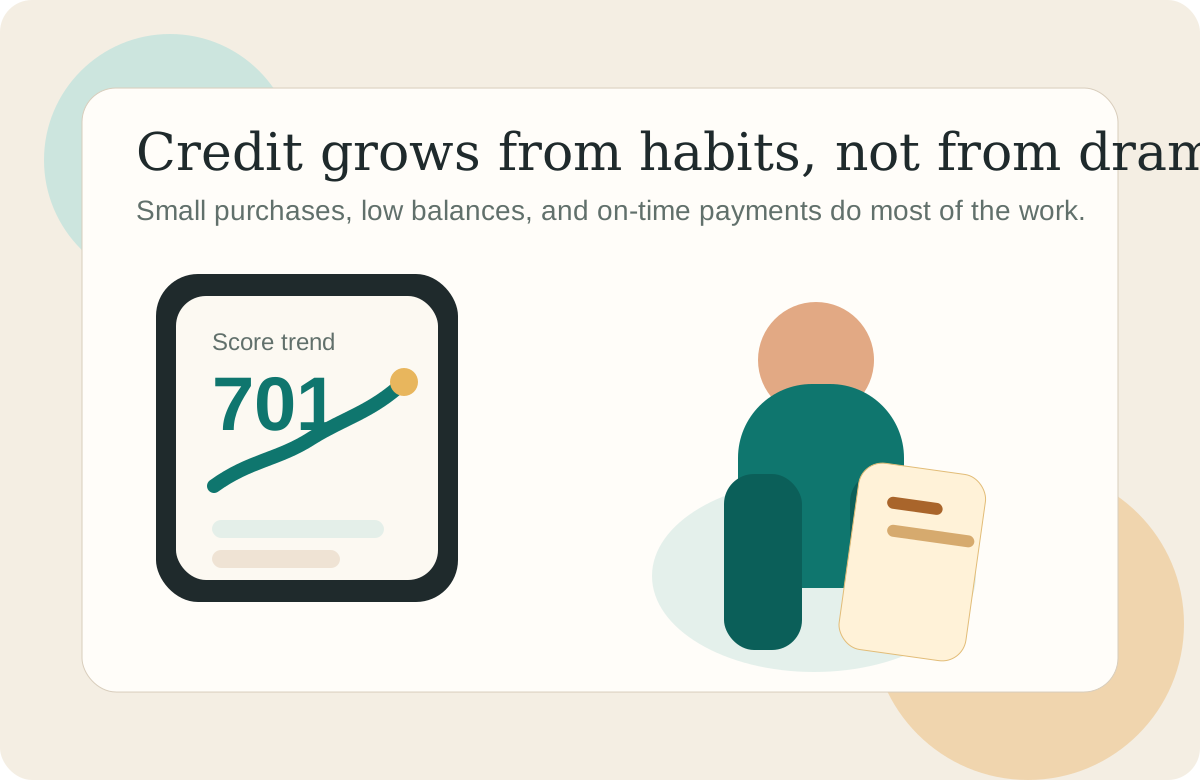
- Pay on time every month, even if the balance is tiny
- Keep your statement balance low relative to the limit
- Set autopay and due-date alerts immediately
- Do not stack multiple new cards unless there is a real reason
Common mistakes that make a first card expensive
Most student credit card problems come from treating the card like extra income instead of a payment tool. Missing one due date, carrying a high balance, or ignoring the statement for a month can undo the benefit of getting approved in the first place.
The other common mistake is assuming a better card is always around the corner. In the first year, your goal is not optimization. It is stability. A simple card used well will usually beat a more exciting card used carelessly.
- Missing payments because alerts or autopay were never set up
- Running the balance too high just because the limit allows it
- Applying for too many cards in a short stretch
- Closing the first card too early after getting approved for something better
Bottom line
A first student credit card does not need to be perfect. It needs to be easy to keep open, easy to pay on time, and useful enough that you will actually use it every month without overspending.
If you want a next step after this guide, our cash back card guide, budgeting guide, and expense tracking workflow all fit well once your first account is live and you want to manage it more intentionally.
Frequently asked questions
Can I get a credit card with no credit history as a student?
Yes. Student cards and some beginner-focused cards are built for applicants who are just starting out, though income and other approval factors still matter.
What is the easiest student credit card to get?
Discover's student cards and beginner products like Chase Freedom Rise are among the more accessible unsecured options, while secured cards like OpenSky are usually easier still.
Do student credit cards usually come with low limits?
Yes, that is common. Lower limits reduce issuer risk and can still be enough to build credit if you keep balances low.
Will a student credit card help build my credit score?
It can, as long as the issuer reports your account and you use the card responsibly over time.
Should I start with a secured or unsecured card?
If you can qualify for a student or starter unsecured card, that is usually the cleaner first step. A secured card is a sensible backup when approvals are tougher.
How long does it take to build credit from scratch?
Many beginners start generating a score within a few months once the account is open and reporting, but a stronger file usually takes longer than that.