Best Credit Cards for Immigrants in the USA (No SSN Required): 2026 Guide
Starting over in a new country is hard enough without also hearing that you need years of U.S. credit history before anyone will give you a card. In practice, many newcomers can get moving with an ITIN, a U.S. bank account, and the right first-card strategy.
Key takeaways
- An SSN is not always required, but many issuers will ask for an ITIN or another tax ID instead.
- The strongest starter options in 2026 are newcomer-friendly fintech cards, starter unsecured cards, and secured cards that report to all three major bureaus.
- Your first six months of on-time payments and low balances matter as much as the card you choose.
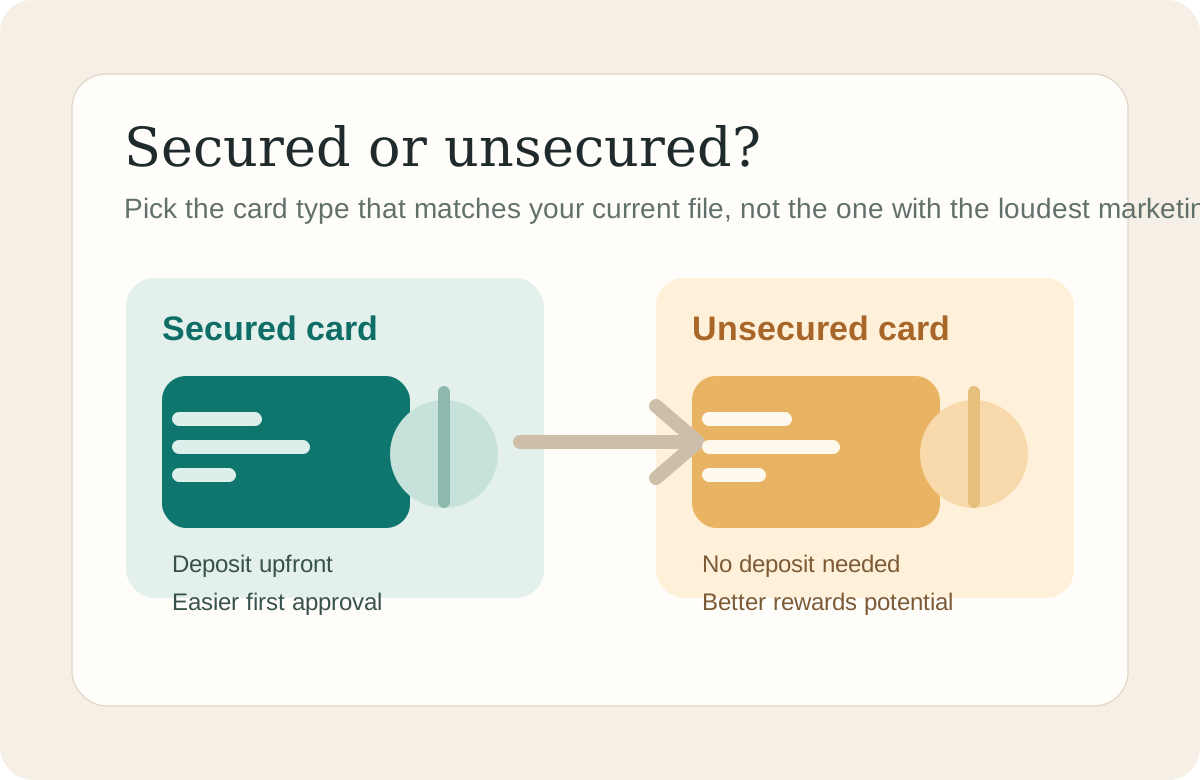
| Topic | Option A | Option B |
|---|---|---|
| Deposit required | Yes | No |
| Approval friction | Usually lower | Usually higher |
| Up-front cash needed | Higher | Lower |
| Rewards potential | Usually limited | Usually better |
| Best fit | No credit history or recent denials | Stable income and cleaner approval odds |
Editorial picks
Petal 1 / Petal 2
Best for thin-file applicants who can show healthy cash flow
Petal accepts an SSN or ITIN and may use linked bank-account data when a traditional credit file is limited.
Capital One building-credit cards
Best for ITIN holders who want a pre-approval screen first
Capital One's pre-approval flow accepts an SSN or ITIN and can surface student, secured, or other beginner-friendly options before a hard pull.
Chase Freedom Rise
Best for newcomers who can also open a Chase deposit account
Chase built Freedom Rise for people who are new to credit and says a funded Chase checking or savings account can improve approval odds.
American Express Global Card Transfer
Best for immigrants who already had an Amex relationship abroad
If you are relocating with an existing Amex card, Global Card Transfer can make the U.S. application process much easier.
OpenSky Secured Visa
Best for a lower-friction secured fallback
OpenSky highlights no credit check and reporting to all three major bureaus, which can help when traditional underwriting keeps getting in the way.
You can start building credit before you have an SSN
For many immigrants, the hardest part is not the monthly payment. It is getting into the system at all. U.S. lenders lean heavily on credit reports, so a newcomer with solid income and savings can still look invisible on paper.
That is why this topic matters beyond credit cards. A stronger credit file can make it easier to rent an apartment, finance a car, qualify for better insurance pricing, and eventually borrow at lower rates. The first goal is not chasing rewards. It is establishing a file that future lenders can recognize.
- No U.S. credit history does not always mean no options
- Many issuers accept an ITIN in place of an SSN
- Starter cards are more useful than premium cards in year one
What to line up before you apply
Most newcomers do better when they prepare the paperwork first and apply second. In plain terms, that usually means an ITIN if the issuer accepts one, a U.S. mailing address, a domestic bank account, a phone number, income details, and a photo ID.
If you still need an ITIN, the IRS ITIN guide is the best starting point. The IRS is clear that an ITIN is for federal tax administration, not work authorization, but it can still unlock bank and credit applications when an issuer accepts it.
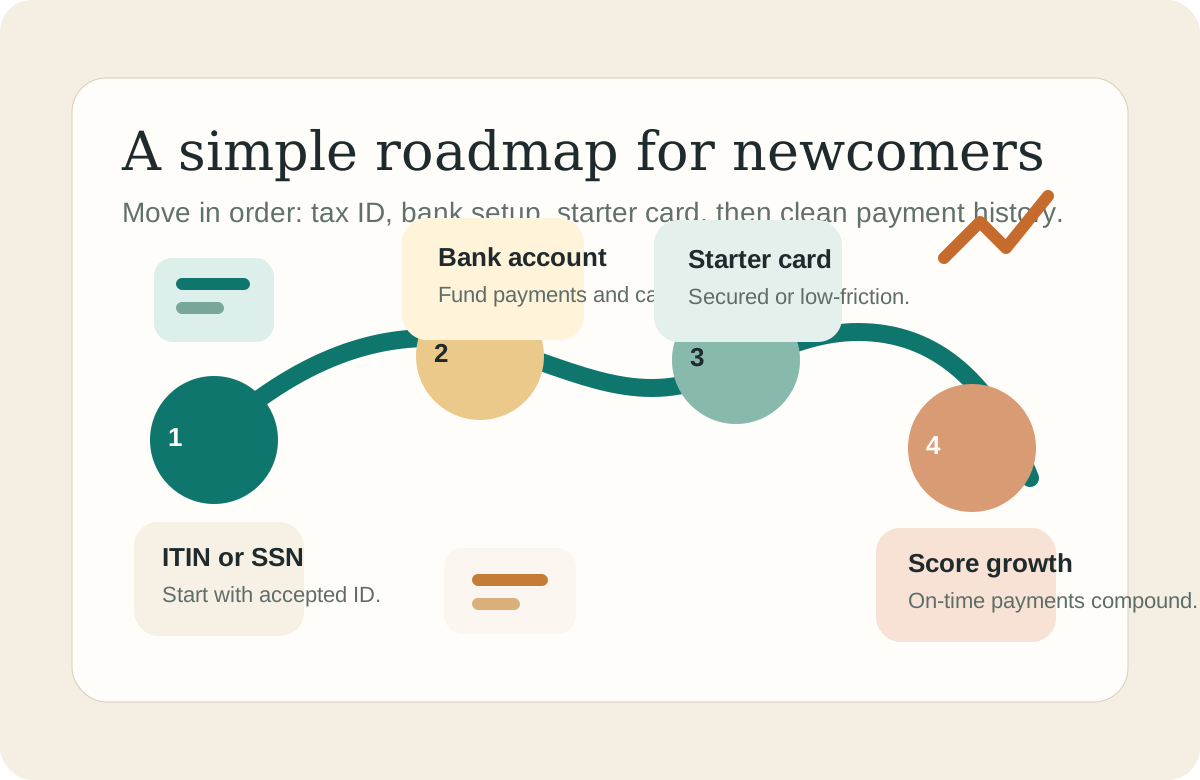
- Tax ID: SSN if you have one, ITIN if the issuer allows it
- U.S. bank account for payments and, in some cases, cash-flow review
- Proof of income and a stable mailing address
- A realistic plan to keep balances low from the start
How to compare the best options without overcomplicating it
The right card depends on what kind of file you have today. If you have no U.S. credit but steady income moving through a bank account, a fintech option like Petal can be worth checking first. If you prefer a large issuer, Capital One's pre-approval path is a sensible way to test your odds before a hard inquiry.
If you already had American Express in another country, Global Card Transfer deserves a serious look because it is one of the few mainstream programs designed around relocation. And if you have already been denied elsewhere, a secured card like OpenSky can be the practical reset button that gets reporting started.
- Use pre-approval when it is available
- Do not pay an annual fee just to get your first tradeline
- A secured card is not a failure if it helps you build clean history
How to build credit quickly in your first six months
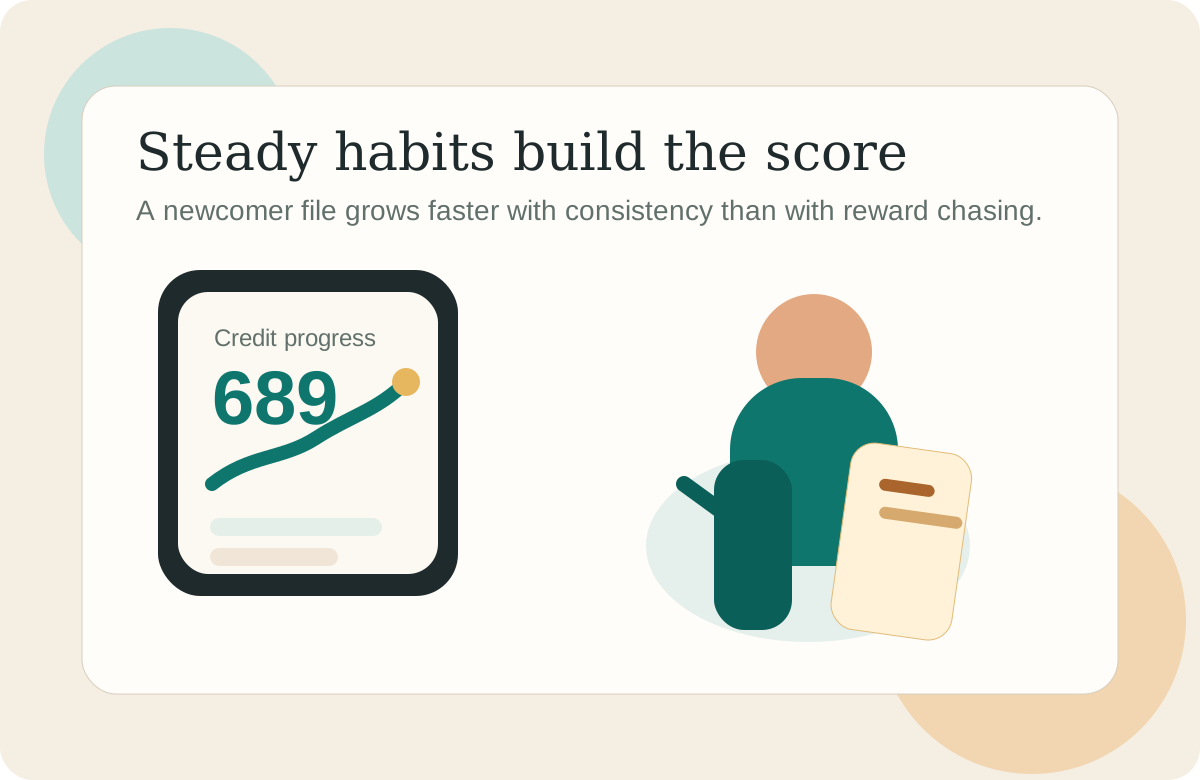
Once you are approved, the playbook should be boring on purpose. Put one or two small recurring expenses on the card, pay the bill on time every month, and keep your statement balance comfortably below the limit. That simple pattern does more for your file than hopping between applications looking for a better card.
It is also worth checking your reports for accuracy. AnnualCreditReport.com gives you access to your credit reports, while the CFPB's guide to reviewing your reports is a good reminder that reports and scores are not the same thing.
- Pay on time every single month
- Keep utilization low, especially before the statement closes
- Wait before applying for a second card unless you truly need one
- Use alerts or autopay so a missed due date never becomes the reason your file stalls
Common mistakes that slow newcomers down
The biggest mistake is treating the first approval like the finish line. A new account only helps if the habits behind it are consistent. Missing one payment early can set the whole process back.
The second mistake is applying too widely in a short stretch. Multiple applications make sense only when you have a clear plan. Otherwise, the better move is picking one realistic option, using it well, and upgrading later when your profile gives you more leverage.
- Ignoring fees and minimum deposit requirements
- Carrying a high balance just to show activity
- Closing the first account too quickly after qualifying for something better
- Using a fake credit privacy number instead of an SSN or ITIN
Bottom line
You do not need a perfect profile to begin building credit in the United States. You need a realistic entry point, a card that matches your current file, and a few months of very consistent behavior.
Once your profile is established, you can become more selective about rewards and fees. Until then, focus on the basics, keep your spending visible, and give the account time to work. When you are ready for the next step, our cash back guide and expense tracking workflow can help you choose a better long-term setup.
Frequently asked questions
Can I get a credit card in the U.S. without an SSN?
Often yes. Many issuers accept an ITIN instead, and some newcomer-focused issuers use alternative underwriting. Approval rules still vary by card.
What is the easiest first card for immigrants to get?
A secured card is usually the easiest starting point because the deposit lowers the issuer's risk. Pre-approval tools from issuers like Capital One can also help narrow the field before you apply.
Can international students build credit without an SSN?
Yes, in many cases. Students still need to check each issuer's identity and income requirements, but an ITIN or another accepted tax ID can be enough with the right card.
How long does it take to build credit from scratch?
Many people begin generating a score within a few months once an account is open and reporting, but a stronger file usually takes closer to a year of steady use.
Do I need a U.S. bank account to get approved?
Usually, yes. Many issuers want a domestic bank account for payments, and some fintech cards may use linked-account cash flow during underwriting.
Can my foreign credit history help in the U.S.?
Sometimes. American Express Global Card Transfer is the clearest example, but most issuers still focus on U.S. credit data and U.S.-based identity checks.